EU-China talks put European industrial margins at risk
Associated Press
news
EU faces economic showdown with China over a daily $1 billion trade deficit
Al Jazeera
news
EU-China trade talks begin in Beijing amid escalating pressure
South China Morning Post
news
Last chance saloon: EU presses China for a sign to prove trade talks can work
€360bn deficit
The EU’s goods deficit with China is estimated at about €360 billion a year, or roughly €1 billion a day.
Margin test
Autos, machinery, chemicals and clean-tech suppliers face pressure from both Chinese demand weakness and Chinese import competition.
Retaliation risk
China has signalled it has tools ready if trade tensions escalate, raising risks for European exporters.
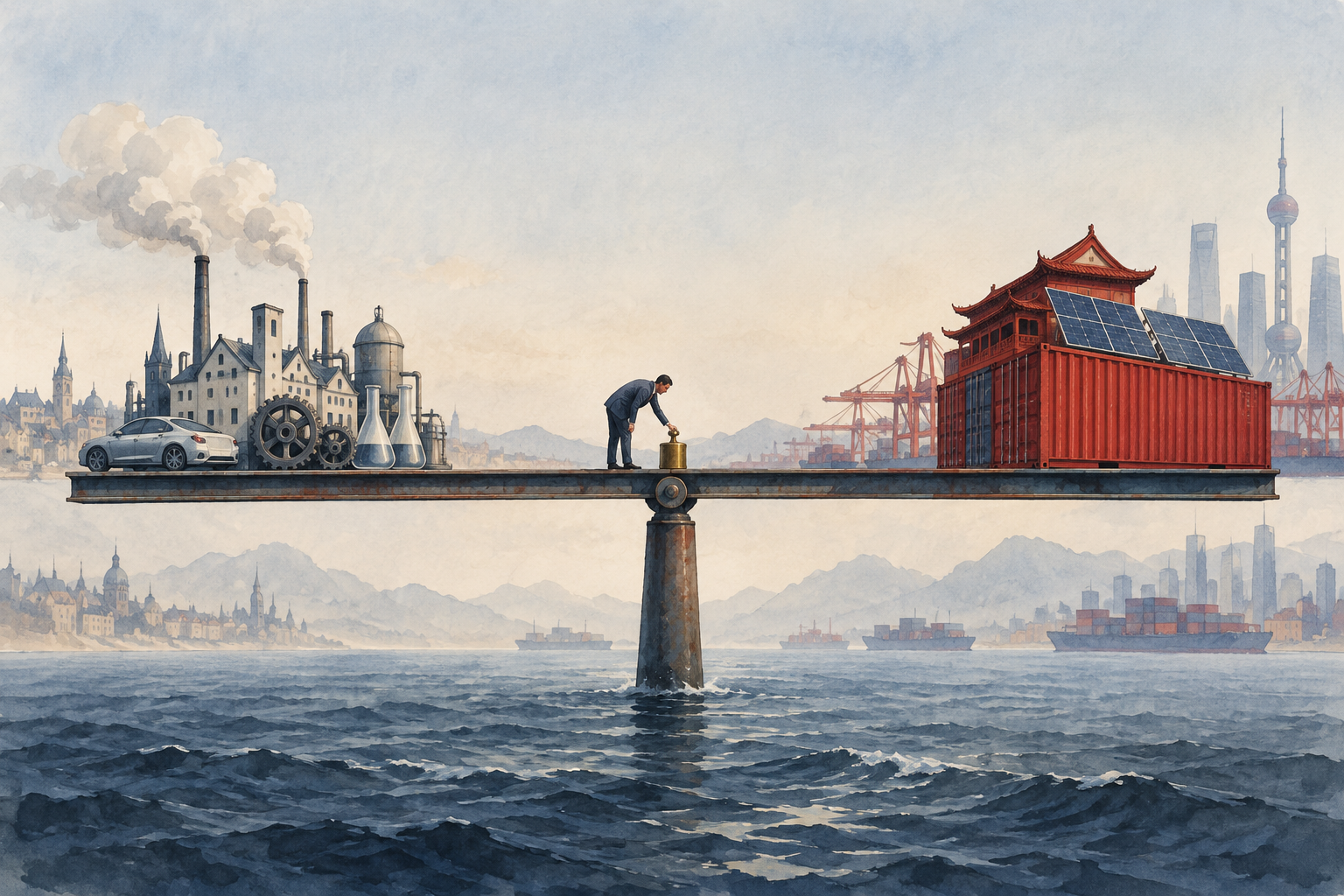
European Trade Commissioner Maros Sefcovic’s talks in Beijing are less a diplomatic set piece than a live stress test for European industrial earnings. Brussels is trying to reduce a goods deficit with China estimated at about €360 billion a year, or roughly €1 billion a day, while avoiding a trade escalation that would hit listed exporters already under margin pressure.12
For European equity investors, the central issue is not whether the EU can secure symbolic language on market access. It is whether Brussels can slow the import shock in cars, machinery, metals, chemicals and clean-tech supply chains without inviting Chinese countermeasures against companies that still rely on China for sales, sourcing or growth optionality.49
That makes the Beijing meetings a cross-sector margin event. German automakers face intensifying competition from Chinese electric and hybrid vehicles in Europe and China. Machinery suppliers warn that unfair practices are eroding Europe’s manufacturing base. Chemicals producers are seeing trade-defence pressure broaden beyond autos. Clean-tech and battery-linked companies remain exposed to rare earths, critical minerals and Chinese overcapacity.5713
The EU’s negotiating position has hardened because the deficit is no longer seen only as a macro imbalance. Brussels increasingly treats it as evidence that China’s industrial model is exporting excess capacity into Europe at prices European producers cannot match without sacrificing returns.1
According to Reuters reporting carried by MarketScreener, Sefcovic’s agenda includes rare earth and critical-mineral curbs, along with abnormal increases in Chinese imports across machinery, metals and chemicals.4 Al Jazeera also reported that the talks are focused on the daily deficit and rare earth export restrictions, underscoring that raw materials and manufactured goods are now part of the same negotiating package.2
The investment implication is clear: the EU wants to defend industrial margins, but its most exposed listed companies are also vulnerable to retaliation. Bloomberg reporting via The Business Times said China has warned it has tools ready if tensions escalate, including foreign-subsidy probes and anti-discrimination measures.9 That risk limits the upside from a tougher European trade stance for exporters with meaningful China exposure.
Autos remain the clearest equity transmission channel. The EU is seeking ways to curb cheap Chinese hybrid electric car imports while avoiding a broader trade war, according to The Guardian.5 ARA reported that Brussels has trade-defence measures ready if China does not limit exports, with Chinese hybrids gaining attention in the European market.10
For Volkswagen, Mercedes-Benz, BMW, Porsche and Stellantis, the issue is not only lost volume in Europe. It is pricing power. Chinese automakers are competing with cost structures and product cycles that challenge Europe’s premium and mass-market incumbents at the same time. Axios described German automakers as being in crisis mode as Chinese electric vehicles bear down, highlighting the competitive squeeze facing Volkswagen, Mercedes-Benz and BMW.8
Porsche shows how quickly the China story has shifted from growth engine to margin discipline. The company’s capital markets update laid out a strategy through 2035 focused on a lower break-even point, cost measures and a profitability reset.11 Reuters reporting via Euronext said Porsche is bracing for lower sales as it leans further into luxury, with margin pressure, planned job cuts and low-cost Chinese rivals shaping the reset.12
The equity question is whether trade tools can buy time for European automakers to reprice, localise supply chains and defend brand premiums. If Brussels moves too softly, Chinese imports could keep compressing European margins. If it moves too aggressively, China could target the German premium brands that still need Chinese demand to support group profitability.
Machinery is the sector where the talks most directly test Europe’s industrial model. Listed groups such as Siemens, Schneider Electric, ABB, Sandvik, Atlas Copco, GEA and Kion depend on global capital expenditure cycles, automation demand and factory investment. Many also face Chinese competitors moving up the value chain in industrial equipment, power systems, robotics and components.
The VDMA, Germany’s machinery industry association, said the EU must no longer allow itself to be strung along by China and called for concrete concessions and action against unfair practices harming European industry.7 That language matters for investors because machinery margins are highly sensitive to utilisation, mix and pricing. A persistent inflow of subsidised or underpriced Chinese equipment can pressure aftermarket economics and replacement-cycle profitability, not just new orders.
South China Morning Post reporting described EU hopes for a proof-of-concept arrangement to rebalance trade after Sefcovic’s meeting with Chinese Commerce Minister Wang Wentao.3 For machinery stocks, that proof would need to be practical: better procurement access, reduced regulatory discrimination, clearer treatment of European firms in China and visible moderation in export pressure to Europe.
Without that, European machinery equities risk being valued less as quality compounders and more as cyclical manufacturers facing structural price competition.
Chemicals are a second-order but increasingly important battleground. Reuters reporting via MarketScreener highlighted abnormal import increases in chemicals alongside machinery and metals.4 Separately, the UK’s proposed duty on imports of Chinese rutile titanium dioxide shows that trade-defence pressure is already extending into chemicals and coatings supply chains.13
For listed names such as BASF, Covestro, Arkema, Solvay, Akzo Nobel and Clariant, the China debate cuts both ways. Weak Chinese construction, consumer and industrial demand has weighed on volumes and spreads. At the same time, Chinese capacity in intermediates, pigments, battery materials and specialty inputs can depress European pricing even when local demand stabilises.
That makes chemicals investors particularly sensitive to the shape of EU policy. Narrow duties can support pricing in selected product lines. Broad escalation can raise input costs, disrupt supply chains and invite retaliation in end markets where European producers still sell high-value specialty products.
Critical minerals are where trade policy, industrial policy and clean-tech valuations meet. Rare earth restrictions and related mineral curbs are central to the talks, according to both Al Jazeera and Reuters reporting.24 The exposure runs through electric vehicles, wind turbines, power electronics, grid equipment, batteries and industrial automation.
For European clean-tech suppliers such as Vestas, Siemens Energy, Nexans, NKT, Alfen, Umicore and battery-materials producers, the risk is asymmetric. Europe wants domestic manufacturing capacity, but many supply chains remain dependent on Chinese processing, components or precursor materials. If Beijing tightens export controls, input scarcity could lift costs just as European companies are trying to restore profitability after years of inflation, project delays and price competition.
At the same time, Chinese overcapacity in solar, batteries and electric mobility continues to challenge European manufacturers. The EU therefore faces a difficult policy balance: it needs Chinese materials to be less constrained, but Chinese finished-goods exports to be more disciplined.
The European Commission has confirmed that Sefcovic is in Beijing on October 8 and 9 for the second EU-China Trade and Investment Consultations, with trade-defence tools part of the discussion.6 ARA reported that the EU is sharpening its weapons in case negotiations fail, while still seeking limits or arrangements that avoid immediate escalation.10
This sequencing matters. Brussels appears to be signalling that negotiation remains the preferred route, but that patience is narrowing. South China Morning Post’s framing of the talks as a “last chance saloon” captures the political pressure: the EU needs a tangible sign that dialogue can produce measurable rebalancing.3
For markets, a constructive outcome would likely be modest rather than dramatic: faster rare earth licensing, sector-specific import moderation, technical talks on hybrids and clearer commitments on market access. That would not solve the deficit, but it could lower the near-term probability of a tariff spiral.
A negative outcome would be more consequential. If talks fail, investors should expect higher odds of EU trade-defence cases across autos, machinery, metals, chemicals and clean-tech products. China’s likely response would not need to be symmetrical to be damaging; targeted probes or administrative pressure could weigh on European exporters’ China earnings and valuation multiples.9
The immediate beneficiaries of a firmer EU line would be companies most exposed to Chinese import competition in Europe and least dependent on Chinese sales. That points to selected chemicals, components, industrial equipment and clean-tech suppliers where pricing has been undermined by low-cost Chinese imports.
The more complicated group is Germany’s auto complex. Trade protection in Europe may help defend residual values and pricing, but retaliation risk falls heavily on the same companies. Porsche’s profitability reset and China retreat show that management teams are already preparing for a lower-growth environment rather than assuming a return to the old China premium cycle.1112
Machinery sits between those poles. European industrial champions need better protection from unfair competition, but many still benefit from Chinese factory automation, electrification and infrastructure demand. For these stocks, the ideal outcome is targeted enforcement rather than blanket confrontation.
Chemicals and clean tech may see the broadest policy spillovers. Duties and investigations can support specific product margins, but mineral curbs or supply-chain disruption can quickly offset the benefit. Investors should distinguish between companies selling into protected European markets and those reliant on Chinese inputs.
Sefcovic’s Beijing visit is a test of whether Europe can convert trade frustration into investable policy. A negotiated de-escalation with concrete concessions would support European industrial margins by reducing the threat of uncontrolled import pressure. A breakdown would raise the probability of a more volatile regime: tariffs, probes, licensing delays and retaliatory pressure on exporters.
For European equities, the talks should be read less as a binary diplomatic event and more as the start of a longer repricing of China exposure. The winners will be companies with defensible technology, flexible supply chains and limited reliance on Chinese end demand. The losers will be those caught in the middle: exposed to Chinese competition in Europe, but too dependent on China to welcome a trade fight.

Whitbread’s first-half results show Premier Inn still gaining accommodation revenue in the UK and Germany, but the investment case now depends on whether that growth can compound faster than cost inflation, impairments and activist pressure. Corvex’s board-seat campaign turns the hotel group into a live test of how much patience investors still have for UK consumer-sector self-help plans.

BP’s third-quarter update put a sharp refining-margin uplift and faster deleveraging ahead of another multibillion-dollar impairment charge tied mainly to transition businesses. The share-price reaction suggests investors are prioritising near-term cash generation, but the reset leaves capital-discipline questions unresolved.

ASML’s record Q3 results validate the artificial-intelligence capital-spending cycle, but they also expose the next constraint: whether Europe’s most important semiconductor-equipment supplier can expand lithography capacity fast enough through 2028. For investors, the question is moving from whether AI demand is real to whether supply, export controls and order timing can sustain ASML’s valuation.
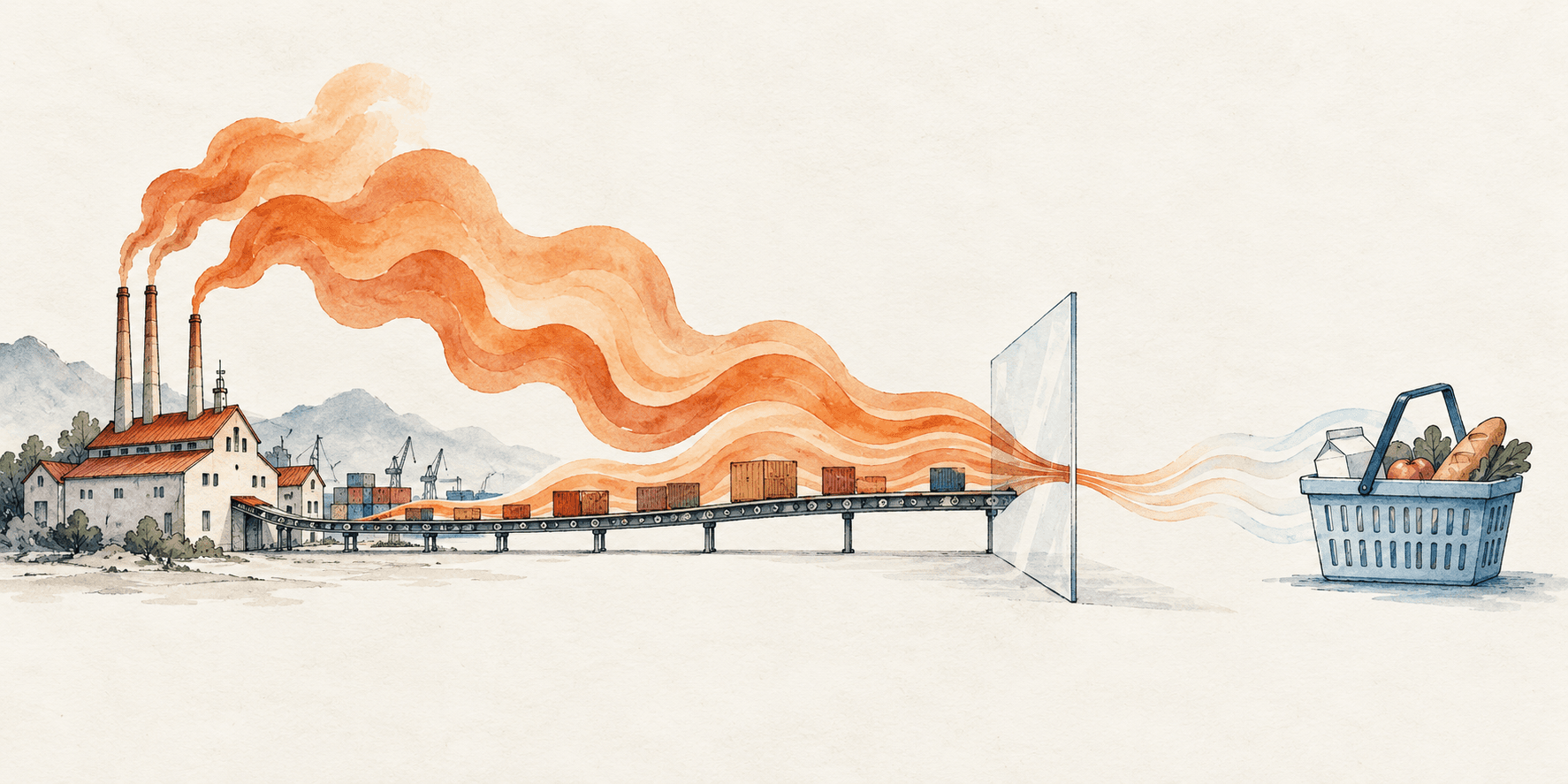
China’s producer prices are rising at their fastest pace since mid-2022, but consumer inflation remains subdued. That mix suggests global supply chains may face higher input-cost pressure before importers and households see clear pass-through.
Trade-defence measures
Policy tools such as tariffs, duties or investigations used to counter imports judged to be unfairly subsidised or dumped.
Critical minerals
Raw materials such as rare earths that are essential for electric vehicles, wind turbines, electronics and industrial equipment.
Import competition
Pressure on domestic producers when foreign suppliers sell similar goods into their home market, often affecting prices and margins.
Retaliation risk
The possibility that China responds to EU trade action with its own probes, restrictions or administrative pressure on European companies.
Comments